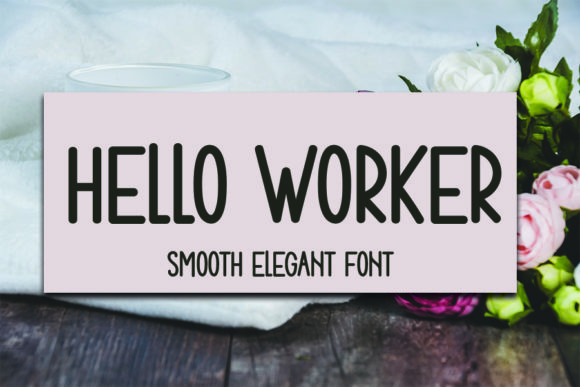
Hello Worker: A Simple and Neat Lettered Display Font for Creative Workflows
Hello Worker is a display font that stands out with its clean, modern design and readability. It’s not just another typeface—it's a tool that can enhance the visual impact of your creative projects, presentations, and digital content. Whether you're designing a logo, crafting a website, or creating marketing materials, Hello Worker brings clarity and style to your work.
Understanding Hello Worker and Its Role in Design
Hello Worker belongs to the category of display fonts—fonts designed for headlines, titles, and other prominent text elements rather than body copy. Its letterforms are balanced, well-spaced, and visually appealing, making it ideal for catching attention without overwhelming the viewer.
This font works best when used sparingly. Because of its bold character, it shines in headings, banners, and call-to-action buttons. When integrated into a broader design, Hello Worker helps create a cohesive visual hierarchy, guiding the reader's eye through your content effectively.
Where Hello Worker Fits in Your Creative Process
Before starting a project, consider how typography will influence the overall look and feel. Hello Worker can be part of your initial planning phase by setting the tone for your design. For instance, if you're launching a new brand, selecting Hello Worker as your primary font can help establish a professional yet approachable identity.
During the execution phase, use Hello Worker to highlight key messages. It pairs well with sans-serif fonts for body text, creating a contrast that improves readability. You might also use it in conjunction with icons or illustrations to reinforce your message visually.
After completing a project, review how Hello Worker contributes to the final outcome. Does it support the intended message? Is it consistent across all platforms and mediums? These considerations ensure that your typography choices align with your brand's goals and audience expectations.
Integrating Hello Worker Into Your Workflow
Integrating Hello Worker into your workflow involves more than just installing the font on your computer. It requires thoughtful consideration of how it interacts with other tools and resources you use regularly.
If you're using graphic design software like Adobe Photoshop or Illustrator, make sure Hello Worker is available in your font library. Familiarize yourself with its characteristics, such as weight, spacing, and kerning, to apply it effectively in your designs.
For web designers, Hello Worker can be embedded in your site using Google Fonts or by linking to a font file hosted on your server. This ensures that your typography remains consistent across different devices and browsers.
Content creators and bloggers may find Hello Worker useful for headers and subheadings in articles or blog posts. It adds a touch of professionalism while keeping the layout visually engaging. Pair it with a readable body font to maintain balance and avoid clutter.
Practical Implementation Tips
Here are some practical tips to help you implement Hello Worker smoothly into your workflow:
- Use it selectively: Apply Hello Worker only where it adds value, such as headlines or calls to action. Overusing it can lead to visual fatigue and reduce readability.
- Test across platforms: Ensure that Hello Worker displays correctly on different screens, including mobile devices. Adjust sizes and spacing as needed for optimal legibility.
- Pair wisely: Combine Hello Worker with complementary fonts that share similar stylistic elements. This creates a harmonious visual effect and improves the user experience.
- Stay consistent: Use Hello Worker consistently throughout your project to maintain a unified look. Avoid mixing it with too many other fonts unless it serves a specific purpose.
- Consider accessibility: While Hello Worker is visually appealing, ensure that it meets accessibility standards. Check contrast ratios and legibility on various backgrounds.
Workflow Examples and Real-World Applications
Let’s explore how Hello Worker can be applied in different contexts:
Marketing Materials: Use Hello Worker for headlines in brochures, flyers, and posters. Its clean lines and modern aesthetic make it perfect for conveying professionalism and innovation.
Website Design: Incorporate Hello Worker in navigation menus, hero sections, and button text. It draws attention to important features and enhances the overall user interface.
Social Media Posts: Apply Hello Worker to captions, hashtags, and promotional banners. It adds personality and visual interest to your content, helping it stand out in crowded feeds.
Presentations: Use Hello Worker for slide titles and key points. It makes your slides more engaging and easier to follow, especially during client pitches or team meetings.
Print Projects: Choose Hello Worker for invitations, business cards, and packaging. Its crisp appearance ensures that your printed materials look polished and high-quality.
Long-Term Use and Quality Control
When using Hello Worker over an extended period, it's essential to monitor its performance and relevance. Periodically review how it fits into your evolving brand identity and design needs. If changes occur, adjust your font usage accordingly to maintain consistency and effectiveness.
Quality control is also crucial. Ensure that Hello Worker remains compatible with your tools and platforms. Stay updated with any new versions or updates to the font that may improve its functionality or aesthetics.
Finally, consider the long-term impact of your typography choices. A well-chosen font like Hello Worker can contribute to brand recognition and customer trust, making it a valuable asset in your creative toolkit.
By integrating Hello Worker thoughtfully into your workflow, you can elevate the quality of your work and create more impactful designs. Whether you're a designer, marketer, or entrepreneur, this font offers versatility and style that can enhance your creative process and outcomes.